Welcome: Nanjing FET International Trading Co., Ltd
Language:
 ∷
∷

∷
 ∷
∷
The dual salt and pepper grinder has become a staple in modern kitchens, blending convenience with functionality for home cooks and culinary enthusiasts alike. This compact tool eliminates the need for separate seasoning containers, saving counter space while ensuring fresh, flavorful salt and pepper at every meal. But to keep your dual salt and pepper grinder performing at its best, proper refilling is key—not just for maintaining taste, but also for preserving the grinder’s mechanism over time. A well-refilled salt grinder ensures consistent grinding, avoids clogs, and prevents flavor cross-contamination between salt and pepper. In this guide, we’ll walk you through everything you need to know to refill your dual grinder step by step, plus share pro tips for maintenance and troubleshooting common issues.
A dual salt and pepper grinder is a two-in-one kitchen tool featuring separate, airtight chambers—one for salt and one for pepper—sharing a single grinding mechanism or dual side-by-side grinders. The design is engineered to keep salt and pepper separate, preserving their distinct flavors and preventing moisture from affecting either seasoning.
Quality dual grinders typically come with specialized grinding mechanisms: ceramic for the salt chamber (resistant to corrosion from salt’s natural moisture) and stainless steel for pepper (durable enough to crush hard peppercorns). This dual-mechanism setup ensures optimal performance for each seasoning, as salt and pepper have different textures and grinding needs.
The benefits of using a dual salt and pepper grinder extend beyond space-saving. It streamlines meal prep, as you can switch between salt and pepper with a simple twist or press, and the airtight chambers lock in freshness, keeping salt from clumping and pepper from losing its aromatic oils. For anyone who values fresh, homemade seasoning, a dual grinder is a practical and efficient choice—especially when paired with a well-maintained salt grinder.
Before refilling your dual salt and pepper grinder, a little preparation goes a long way in avoiding messes, clogs, and flavor contamination. Here’s what you’ll need to get started:
First, choose the right salt for your salt grinder. Coarse sea salt, kosher salt, or Himalayan pink salt are ideal—they’re large enough to grind evenly without clogging the mechanism. Avoid table salt, as its fine grains can clump with moisture and wear down the grinder’s internal parts over time. For pepper, opt for whole peppercorns (black, white, green, or mixed) instead of pre-ground pepper; whole peppercorns retain their aroma and flavor longer, and grinding them fresh ensures maximum taste.
Gather essential tools for mess-free refilling: a small funnel (to avoid spilling seasoning), a dry brush (like a clean pastry brush or toothbrush) for cleaning, a potholder (for handling warm grinders if needed), and a flat tool (such as a butter knife or spatula) for prying open stuck lids.
A critical pre-refill step is cleaning the dual grinder. Even if the chambers aren’t empty, residual salt or pepper can absorb moisture, clump, or mix with new seasoning, affecting taste and performance. Wipe the exterior with a damp cloth, then use the dry brush to remove any leftover seasoning from the chamber openings and grinding mechanisms. For stubborn residue, gently tap the grinder upside down to dislodge particles—avoid using water on the internal chambers, as moisture can cause salt to clump or metal parts to rust.
Refilling a dual salt and pepper grinder is straightforward once you understand its design. Follow these steps for a smooth, mess-free process:
Start by identifying your grinder’s refill mechanism—most dual grinders use one of four common designs: top-twist (twist the top lid to unlock), pull-off (lift the lid straight up), bottom-fill (remove a base plate to access chambers), or squeeze-lift (squeeze the sides of the lid to release). Check the manufacturer’s instructions if you’re unsure—this ensures you don’t damage the lid or mechanism.
For the salt chamber (focusing on your salt grinder’s needs): Empty any remaining salt by tapping the grinder upside down over a bowl. Use the dry brush to wipe the inside of the chamber, removing any clumps or residue. Place the funnel in the salt chamber opening and slowly pour in your chosen coarse salt. Fill the chamber about ¾ full—overfilling can jam the grinding mechanism or prevent the lid from sealing properly. Once filled, secure the lid tightly to keep out moisture.
Next, refill the pepper chamber: Discard any old peppercorns and use the brush to clean out oil residue (peppercorns release natural oils that can build up over time). Add fresh whole peppercorns, again filling the chamber ¾ full to leave room for grinding. Seal the pepper chamber firmly to maintain freshness and prevent spills.
After refilling both chambers, test the grinder. Give each side a few twists to ensure smooth grinding—adjust the grind size (most dual grinders have a dial or knob) to your preference, whether fine for seasoning soups or coarse for sprinkling on grilled meats. If the grinder feels stiff or doesn’t grind evenly, double-check that the chambers aren’t overfilled and the lids are properly sealed.
Proper maintenance is just as important as correct refilling for keeping your dual salt and pepper grinder in top shape. Follow these tips to extend its lifespan and ensure consistent performance:
Stick to regular cleaning routines. For the salt chamber, dry cleaning with a brush every 2–3 refills is usually enough to prevent clumping. For the pepper chamber, wipe the inside with a dry cloth to remove oil buildup every month—if residue is stubborn, use a small amount of food-safe oil (like olive oil) on a cloth to gently clean, then wipe thoroughly to avoid oil transfer to pepper.
Store your dual salt and pepper grinder in a cool, dry place. Avoid placing it near stovetops, ovens, or sinks, as heat and moisture can damage the mechanism and cause salt to clump. Keep it away from direct sunlight, which can degrade the flavor of peppercorns and dry out salt.
Lubricate threaded parts occasionally. If the lid or grind adjustment dial feels stuck, apply a tiny amount of food-safe oil (such as coconut oil or mineral oil) to the threads—wipe off excess to prevent it from seeping into the chambers. Never get oil on the grinding mechanism itself, as this can affect the taste of salt or pepper.
Avoid common mistakes that shorten grinder life: Don’t overfill chambers (this strains the mechanism), never use wet hands to handle salt or pepper before adding to the grinder (moisture causes clumping), and don’t mix different seasonings in the same chamber (this leads to flavor contamination and clogs).
Even with proper refilling and maintenance, you may encounter occasional issues with your dual salt and pepper grinder. Here’s how to fix the most common problems:
Stuck grinder lids are a frequent frustration. If the lid won’t twist or pull off, wrap a rubber band around the lid for extra grip—this increases friction and makes it easier to turn. For lids stuck due to salt clumping, gently warm the lid with a damp cloth (avoid soaking) to melt minor moisture buildup, then try again. Never force the lid open, as this can break the hinge or threading.
Clogged chambers often happen with salt (due to moisture) or pepper (due to oil buildup). For salt clogs, empty the chamber, wipe it dry with a cloth, and add a few grains of rice to the salt—rice absorbs moisture and prevents clumping. For pepper clogs, use a toothpick or small brush to dislodge stuck peppercorns from the grinding mechanism, then refill with fresh peppercorns.
Uneven grinding after refilling usually means the grind size is misadjusted or the mechanism is dirty. Adjust the grind dial to a coarser setting and test—if that doesn’t work, clean the grinding mechanism with a brush to remove any leftover seasoning particles. If the problem persists, check that you’re using the right size salt or peppercorns (too large can jam the grinder, too small can cause uneven grinding).
To prevent cross-contamination, always clean the grinder thoroughly between refills—especially if you’re switching salt or pepper varieties. Use separate brushes for the salt and pepper chambers if possible, and wipe the exterior with a damp cloth to remove any spilled seasoning.
The quality of salt and peppercorns you use directly impacts your dual salt and pepper grinder’s performance and the flavor of your food. Here’s how to choose the best options:
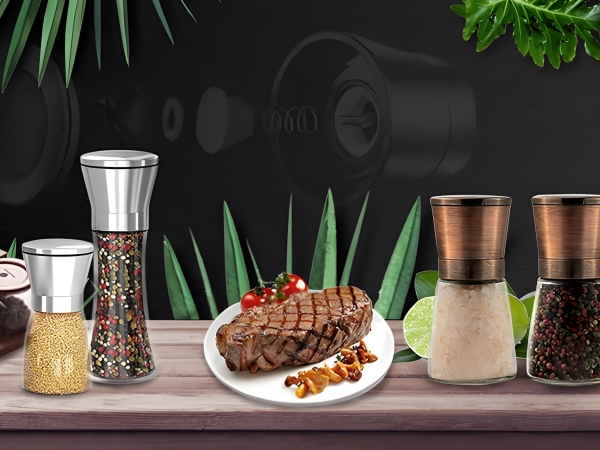
For your salt grinder, select coarse salts that grind easily and retain flavor. Coarse sea salt offers a bright, briny taste, while Himalayan pink salt adds a subtle mineral flavor and visual appeal. Kosher salt is a versatile choice, with large, flaky grains that grind evenly and work well in most dishes. Avoid iodized table salt, as it’s too fine and can clump or corrode the grinder’s ceramic mechanism.
When it comes to peppercorns, whole varieties are a must. Black peppercorns are classic, with a bold, spicy flavor that pairs well with almost any dish. White peppercorns have a milder, earthier taste, ideal for light-colored sauces or dishes where you don’t want black specks. Green peppercorns are fresh and slightly tangy, while mixed peppercorns (black, white, green, and pink) add depth and complexity. Choose high-quality peppercorns—look for plump, aromatic ones, as old or stale peppercorns will grind unevenly and lack flavor.
Consider compatibility with your dual grinder’s mechanisms. Ceramic grinders (typically for salt) work best with hard, coarse salts, while stainless steel grinders (for pepper) can handle even the hardest peppercorns. Avoid using salt in the pepper chamber or vice versa—salt can corrode stainless steel, and pepper’s oils can clog ceramic mechanisms.
Q: Can I use table salt in my dual salt grinder?A: It’s not recommended. Table salt is too fine and can clump with moisture, clogging the grinder’s mechanism. It may also contain anti-caking agents that wear down ceramic parts over time. Stick to coarse sea salt, kosher salt, or Himalayan pink salt.
Q: How often should I refill a dual salt and pepper grinder?A: The frequency depends on usage, but most households refill every 2–4 weeks. Refill when the chambers are about ¼ full—waiting until they’re empty can allow residue to build up, making cleaning harder.
Q: How to prevent salt from clumping in a dual grinder?A: Store the grinder in a dry place, avoid overfilling the salt chamber, and add a few grains of rice to the salt (rice absorbs moisture). You can also wipe the salt chamber with a dry cloth before refilling to remove any lingering moisture.
Q: Is it safe to mix spices in a dual grinder’s chambers?A: No. Each chamber is designed for a specific seasoning—mixing spices can cause flavor cross-contamination and clog the grinding mechanism. Stick to salt in one chamber and pepper in the other.
Q: How to clean a wooden dual salt and pepper grinder?A: Avoid getting wood wet, as it can warp or crack. Wipe the exterior with a dry cloth, and clean the chambers with a dry brush. For stubborn residue, use a small amount of food-safe oil on a cloth to gently wipe the wood, then buff dry.
Refilling a dual salt and pepper grinder is a simple task that yields big rewards—fresh, flavorful seasoning and a long-lasting tool that enhances your cooking experience. By following the step-by-step guide, preparing properly, and maintaining your grinder regularly, you’ll ensure consistent performance from your salt grinder and pepper chamber alike. Remember to choose the right salt and peppercorns, avoid common mistakes like overfilling or using the wrong seasonings, and troubleshoot issues promptly to keep your grinder in top shape. Whether you’re a casual cook or a seasoned chef, a well-refilled and maintained dual salt and pepper grinder is an essential part of a functional kitchen. Now that you have the knowledge, grab your favorite coarse salt and whole peppercorns, and enjoy hassle-free seasoning for every meal.
Contact: Silvia Chan
Phone: +86 15105193797
Tel: +86 17302548247
Email: sales@fet-grinder.com
Add: Xinghuo Road 19,Pukou District, Nanjing City , Jiangsu Province ,China
 Grinder Consultant