Welcome: Nanjing FET International Trading Co., Ltd
Language:
 ∷
∷

∷
 ∷
∷
Himalayan sea salt has become a staple in modern kitchens, celebrated for its rich mineral content, subtle flavor, and striking pink hue. As more home cooks and professional chefs swap pre-ground table salt for fresh-grinded varieties, the himalayan sea salt grinder has emerged as a must-have tool. But a common question lingers: Does this specialized salt grinder deliver the even, consistent grind that elevates dishes? In this guide, we’ll dive into the factors that determine grind uniformity, why it matters, and how to ensure your himalayan sea salt grinder performs at its best—all while unlocking the full potential of your salt.
Uniform grinding isn’t just a matter of aesthetics—it’s a game-changer for flavor, texture, and nutrition. When your himalayan sea salt grinder produces consistent granules, every bite of your dish gets balanced seasoning, avoiding the frustration of overly salty spots or bland areas. For example, a fine, even grind blends seamlessly into sauces, marinades, and baked goods, while a controlled coarse grind adds a satisfying crunch to roasted veggies, grilled meats, or finishing touches on salads.
Beyond flavor distribution, even grinding preserves the natural goodness of Himalayan sea salt. This salt is prized for its 84 trace minerals, including magnesium, calcium, and potassium. Uneven grinding can crush some crystals too finely (losing volatile minerals) while leaving others too large to dissolve, wasting both flavor and nutrients. A reliable salt grinder ensures each crystal is broken down uniformly, maximizing mineral retention and enhancing your culinary creations.
Not all himalayan sea salt grinders are created equal—grind uniformity depends on four core factors. Understanding these will help you choose the right tool and troubleshoot issues if they arise.
The heart of any salt grinder is its grinding mechanism, and for Himalayan sea salt, material matters. Ceramic burrs are the gold standard: they’re corrosion-resistant (critical for salt’s natural abrasiveness), durable enough to handle hard salt crystals, and produce smoother, more consistent grinds than stainless steel or plastic blades. Stainless steel mechanisms, while sturdy for pepper, can rust over time with salt exposure, leading to uneven crushing and flavor contamination. Look for a himalayan sea salt grinder with precision-engineered ceramic burrs to guarantee uniform results.
Himalayan sea salt’s versatility demands customizable grind sizes, and a quality salt grinder delivers just that. Most models feature an adjustment knob (usually at the top or bottom) that lets you switch between fine, medium, and coarse grinds. For evenness, the mechanism should maintain your chosen setting consistently—no random fine or chunky bits. The ideal base setting for Himalayan sea salt is medium-coarse, which works for most cooking needs, but the ability to tweak ensures you get perfect uniformity for every dish.
Even the best himalayan sea salt grinder can’t perform well with the wrong salt. Himalayan sea salt’s crystal size is key: opt for coarse, dry crystals (3-4mm in diameter) to avoid clumping or clogging. Fine or moist salt will either pass through the grinder unaltered or stick together, resulting in uneven grinds. Avoid iodized or flavored Himalayan salts—additives and moisture can gum up the mechanism, ruining uniformity and damaging your salt grinder over time.
A well-designed himalayan sea salt grinder supports even grinding through thoughtful engineering. The hopper (where salt is stored) should be sized to avoid overfilling—packing it too full restricts crystal flow, leading to inconsistent crushing. Aim to fill it halfway for smooth, steady feeding. Additionally, electric grinders offer consistent pressure for bulk grinding, while manual models let you control speed, but both can deliver even results if their design prioritizes balanced salt distribution. Look for grinders with tight-seal lids to keep salt dry, as moisture is a top culprit for uneven grinds.
Achieving uniform grinds with your himalayan sea salt grinder is simple with these actionable steps—from choosing the right tool to proper maintenance.
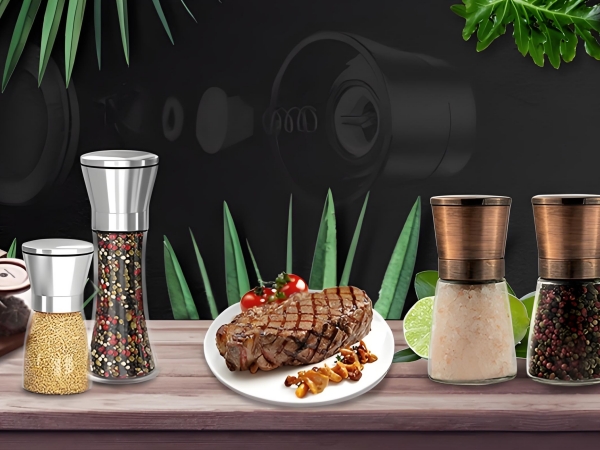
Invest in a salt grinder built for Himalayan sea salt: prioritize ceramic burrs, adjustable settings, and a durable construction (glass, stainless steel, or bamboo are great options). Reputable models like the SCHWUA Pepper and Salt Grinder or Modetro Salt and Pepper Shakers Set are designed for coarse salts, ensuring consistent grinds every time. Avoid cheap plastic grinders—their flimsy mechanisms wear out quickly, leading to uneven performance.
Start with high-quality, coarse Himalayan sea salt (3-4mm crystals are ideal). Before loading, check for clumps—break them apart by hand to ensure smooth flow. Fill the hopper no more than halfway; overpacking causes crystals to jam, resulting in uneven crushing. Wipe away any salt dust from the hopper rim before closing to prevent residue buildup that can hinder performance.
Don’t rely on guesswork—test your himalayan sea salt grinder before using it on dishes. Start with the medium setting, grind a small amount onto a plate, and check for uniformity. If the grind is too powdery, adjust to a coarser setting; if it’s too chunky, go finer. For consistent results, stick to one setting for similar dishes (e.g., fine for baking, coarse for garnishing) and re-test periodically, as salt crystal size can vary between batches.
Salt buildup is the enemy of even grinding—clean your salt grinder every 1-2 months. Empty the hopper, then use a dry brush or soft cloth to wipe away residue from the ceramic burrs and interior. Avoid water, as it can cause rust (for metal parts) or clumping. Store the grinder in a cool, dry place away from humidity—moisture makes salt stick together, leading to uneven grinds and clogs. For wooden grinders, lightly oil the exterior with food-safe mineral oil to maintain durability, but keep oil away from the grinding mechanism.
Yes—reputable brands invest in precision ceramic burrs and consistent engineering, resulting in more even grinds. Cheap, generic grinders often have poorly designed mechanisms that wear out or produce inconsistent results.
Absolutely. First, clean the mechanism to remove salt buildup. If that doesn’t work, check the grind setting (it may have shifted) or the salt quality (replace clumpy or too-fine salt). For manual grinders, ensure the handle is tight—loose parts cause uneven pressure.
Both work well if well-constructed. Electric grinders deliver consistent pressure for bulk grinding, while manual models let you control speed—ideal for small batches or precise seasoning. The key is the quality of the ceramic burrs, not the power source.
This is usually due to salt buildup in the burrs, uneven salt crystal size, or overfilling the hopper. Clean the grinder, use uniformly coarse salt, and fill the hopper halfway to resolve the issue.
A quality himalayan sea salt grinder absolutely can grind evenly—when you choose the right tool, use compatible salt, and follow simple maintenance steps. Even grinding enhances flavor distribution, preserves minerals, and elevates every dish from everyday meals to special occasions. By prioritizing a salt grinder with ceramic burrs, adjustable settings, and a user-friendly design, you’ll unlock the full potential of Himalayan sea salt and enjoy consistent, delicious results every time.
Don’t settle for uneven grinds—invest in a reliable himalayan sea salt grinder and follow the tips above to take your seasoning game to the next level. Whether you’re cooking, baking, or garnishing, fresh, evenly ground Himalayan sea salt is the secret to more flavorful, satisfying food.
Contact: Silvia Chan
Phone: +86 15105193797
Tel: +86 17302548247
Email: sales@fet-grinder.com
Add: Xinghuo Road 19,Pukou District, Nanjing City , Jiangsu Province ,China
 Grinder Consultant